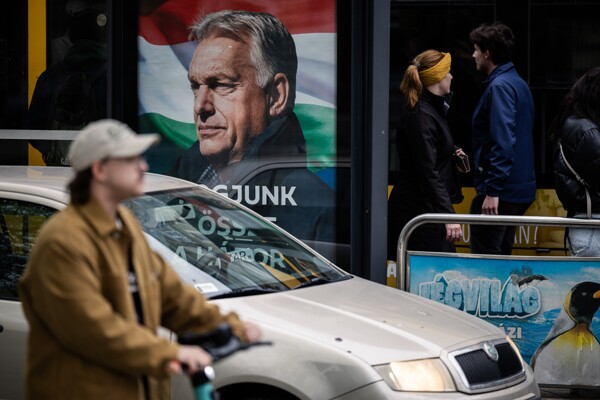
This result illustrates the resilience of democracy in the face of the competitive authoritarianism that Levitsky and Way spoke of. Orbán had built a hybrid regime with formal elections, but with systematic erosion of checks and balances, weakening the separation of powers, control of the judiciary, and control of the media. The electoral system he himself redesigned by applying gerrymandering to perpetuate himself in power was the same one that ended up facilitating the fall of his regime. Once, Przeworski said that democracy is 'institutionalized uncertainty'; because even with manipulated rules, excesses can be corrected when the citizenry exercises real sovereignty, and this is exactly what has happened in Hungary. The Hungarian case is especially significant because it embodies and defeats illiberalism, that concept that Zakaria used to describe regimes that maintain competitive elections but attack and weaken the rule of law, individual freedoms, and minority protection. Orbán even boasted of being an illiberal democrat through a combination of cultural nationalism, state centralization, and clientelism, legitimized by electoral majorities, but at the cost of democratic erosion; that is why the victory of Tisza, a former ally of Orbán. The Hungarian elections represent a historic turning point in the theory and practice of democratization. Viktor Orbán, after 16 years in government with his Fidesz-KDNP coalition, acknowledged his defeat before Péter Magyar and his Tisza party, which won with 54% in an election with a record turnout of 78%. Orbán acknowledged his defeat immediately, confirming the alternation of power. It demonstrates that illiberalism, although resilient, is not invincible: it allows for alternation when a viable opposition emerges from within and the institutions, although weakened, maintain their integrity through resistance. The election in Hungary is no minor fact on the geopolitical level; it is an empirical validation that liberal democracy, despite its many areas for improvement, remains the most robust system for self-correction, as great political scientists such as Przeworski and Dahl expressed at the time. A new era is coming in Europe and in the world, and we are waiting.