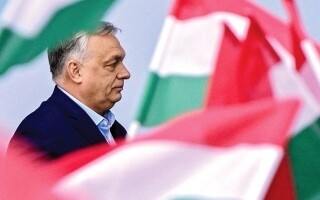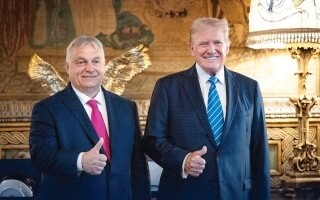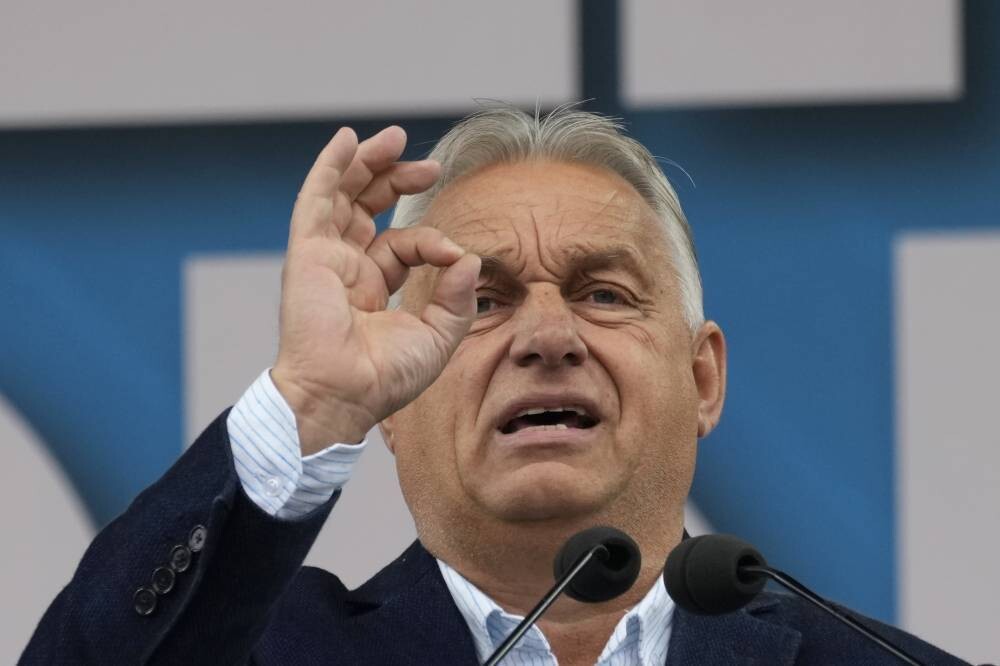
Outgoing Hungarian Prime Minister Viktor Orbán has conceded defeat in yesterday's parliamentary election, delivering a brief speech at his campaign headquarters. The vote ended his 16-year grip on power. The nationalist leader stated: "The election results, though not yet final, are clear for us. They are painful but unambiguous." Analysts noted a high turnout, particularly in medium-sized cities and among young voters, who were more inclined to support opposition candidate Peter Magyar. This support was evident in the visit of his deputy, JD Vance, to Budapest this week, where he praised Orbán's merits and criticized the intervention of "Brussels bureaucrats," where the European Union is based. Trump pledged to harness "the full economic power" of the United States to help Hungary if voters support his ally, whom he sees as embodying the fight against migration and the defense of "Western civilization." During the campaign, the government flooded the country with posters warning that Magyar, leader of the Tisza party, would drag Hungary into Russia's war with Ukraine, which he strongly denies. Orbán had received strong support from US President Donald Trump before the election. Television footage showed long lines outside some polling stations in the capital, Budapest. "We were not given the responsibility or the opportunity to govern," he added, saying he "congratulated the winning party." Yesterday, Sunday, Hungarians went to the polls, where 7.5 million voters inside Hungary, as well as more than 500,000 registered abroad, were called to choose among five parties under a mixed-majority electoral system that largely favors the ruling Fidesz party. Orbán, a nationalist skeptical of the European Union, has crafted a model of what is known as "illiberal democracy," which is seen as a reference point for US President Donald Trump's "Make America Great Again" movement and its admirers in Europe, but many Hungarians are growing weary of Orbán after three years of economic recession and rising living costs, alongside reports of increasing wealth of powerful businessmen close to the government. Opinion polls had shown Orbán's Fidesz party lagging behind the opposition, new Tisza party from a right-of-center current led by Peter Magyar, trailing by seven to nine points, with Tisza garnering support of around 38 to 41 percent. Before the vote, pollsters predicted a record turnout, and data from before midday yesterday showed over 54 percent of voters had cast their ballots, up from 40 percent recorded at the same time in the 2022 election. Magyar expressed confidence in the outcome, saying the only question is whether Tisza will get a simple majority or a two-thirds majority in the 199-member parliament, which would allow it to amend the country's constitution. Orbán had described the election as a choice between "war and peace." "We are choosing between East and West," he said. Analysts had forecast a record turnout of 75 percent before the election. After casting his vote in Budapest, Tisza party leader Peter Magyar called on Hungarians to "mobilize" for these "decisive elections." He urged voters to report any irregularities.