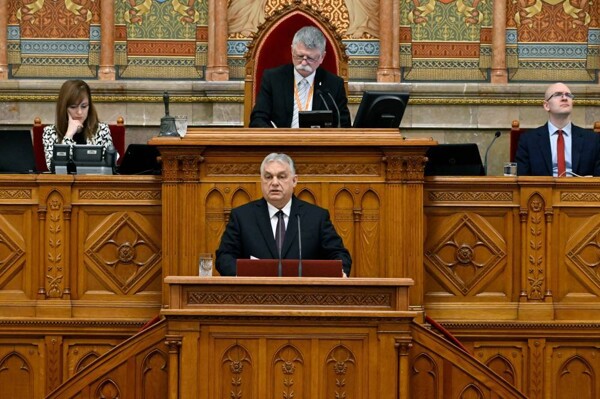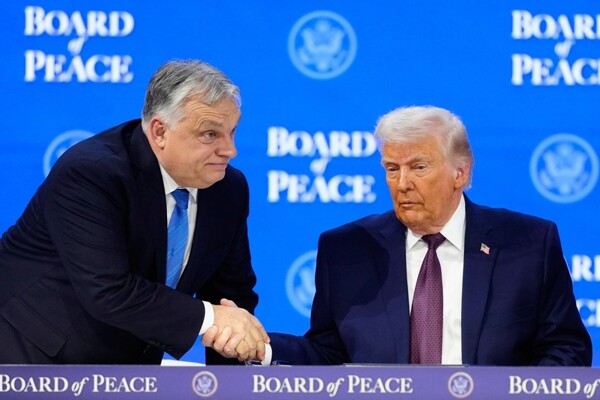
This possibility raises growing concerns that Brussels and some European capitals might make the mistake of confusing political aspirations with the actual reality on the ground. It seems that the prevailing desire in some European circles is simple and clear on the surface. Some observers fear that at this stage, all means may become permissible, both before and after the elections, including indirect interventions, intense scrutiny of information, or even undeclared political and economic pressure. Some analysts believe that in the Hungarian case, the European Union may use a wide range of tools and pressures, as the Orban government is seen by many in the European Parliament, by the President of the European Commission Ursula von der Leyen, and by several European capitals as a major obstacle to their political vision for the Union's future. Among the most prominent issues deepening this divide is the question of Ukraine, which is a central project for many European leaders, especially regarding the idea of accelerating its accession to the European Union. In such a scenario, the final outcome will be determined by a combination of political, ideological, geographical, and even generational factors, a pattern that has become familiar in many democratic countries. On the other hand, there is a prime minister who has held office for 16 years and is considered one of the most experienced leaders among his European counterparts. Orban is seen as one of the most prominent opponents of this approach, which makes him, in the eyes of his opponents, a primary obstacle to this decision, which some consider bold, yet it also sparks wide debate within Europe. As the election date approaches, in six weeks, political tensions have reached high levels. After four previous elections where Hungarian Prime Minister Viktor Orban won landslide victories, and after years of tension and political struggle between him and the EU institutions amid rising criticism, many are adopting a single scenario for the upcoming elections: the victory of his rival Peter Magyar will be overwhelming. Some even treat this scenario as if it is a foregone conclusion before the official election campaign has even begun. However, the political reality may be more complex than these optimistic predictions for Orban's opponents. Nevertheless, such perceptions, according to their critics, may once again reflect the confusion between political wishes and geopolitical reality. At a time when sovereignty ideas are gaining momentum in several countries, including the United States, the nature of international political alliances is also changing. Following the electoral experiences in Poland, Georgia, and Romania, it has become clear that the upcoming Hungarian elections may be the next test of the question of EU interference in the electoral processes of member or nearby countries. The likelihood of the ruling 'Fidesz' party winning remains strong, which is also reflected in the results of some recent by-elections. Of course, each party is entitled to hold on to its hopes and expectations. There is a high probability that the elections will be very close, as was the case in the 2022 elections.