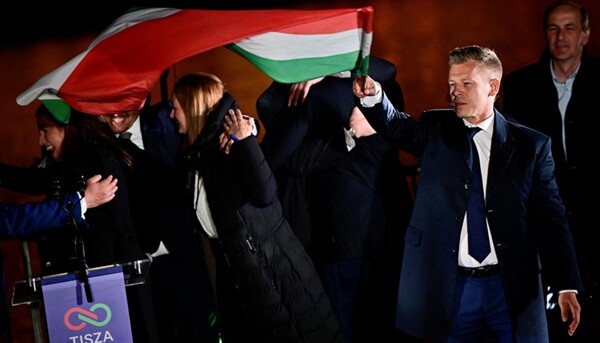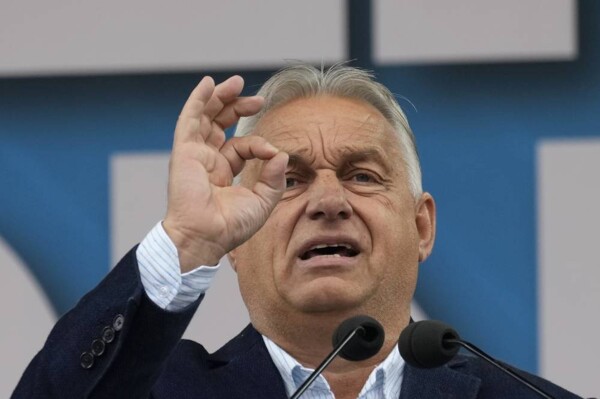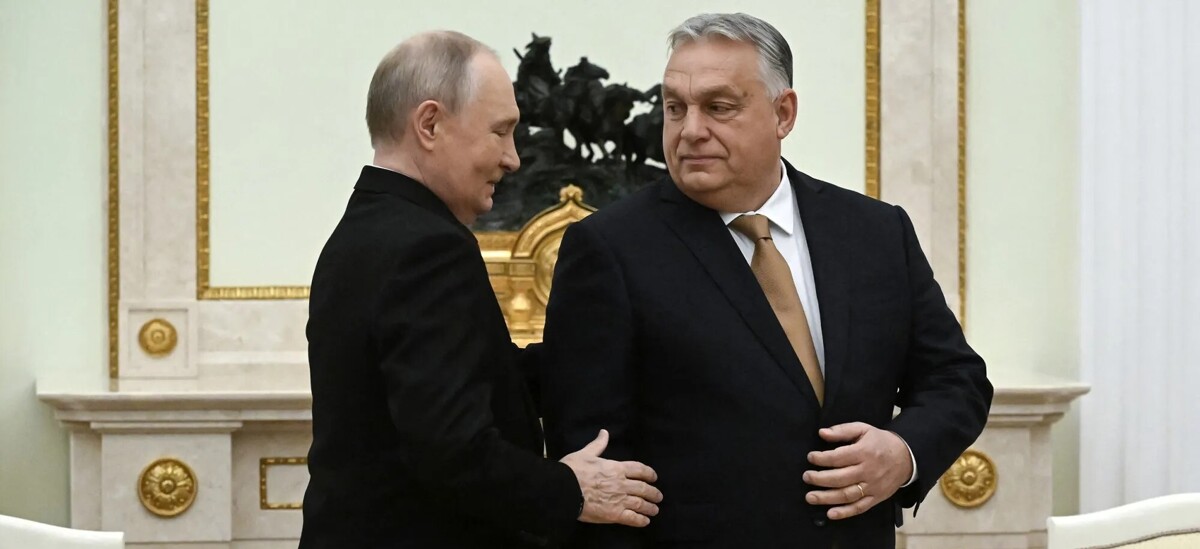
Hungary is undergoing a major political turning point. If the final count confirms the results, the opposition will have a decisive tool to dismantle much of the institutional framework built by Orbán, restore democratic checks, and realign relations with Brussels. During the campaign, it was already clear that Orbán faced his most serious threat since 2010, but the outcome for the ruling party was even worse. The Tisza force, led by Péter Magyar, not only won but achieved a landslide victory. The election, read both within and outside the country as a plebiscite on Hungary's geopolitical course, its ties with Brussels, its proximity to Moscow, and the exhaustion of a political model that had concentrated power, strained institutions, and blocked key EU decisions, including aid to Ukraine. This victory could also facilitate the unlocking of European funds held up over rule-of-law disputes and change Hungary's stance on the war in Ukraine, where the outgoing government had acted as a persistent brake on the bloc's common policies. For the global right that had presented Orbán as an example, the election result delivered a severe warning: even the most entrenched leaderships can be exhausted when a society decides to vote for change. Magyar's message ultimately connected with social discontent and an electorate tired of a power that seemed eternal. Orbán's defeat also has an international dimension that far exceeds Budapest. Orbán had been a political ally of Donald Trump and an admired reference point for factions of the new international right. Orbán's defeat also became a setback for the international projection of Trumpism and for the network of nationalist leaders who had found in the Hungarian leader a political and cultural model to emulate. From a European perspective, the result opens a completely new scenario. For Europe, assailed by Russian pressure, Orbán's departure means much more than a change of government: it signifies the fall of an internal obstruction factor at one of the continent's most strategically sensitive moments. It now remains to be seen at what speed Magyar can translate his electoral victory into real power. Fidesz leaves behind a very extensive state, media, and institutional structure, and the new government will have to govern a terrain colonized for years by Orbanism. But the central political fact no longer changes: the leader who seemed invincible lost, acknowledged the defeat, and began to say goodbye to power. Turnout, moreover, was a record, exceeding 77%, in an unequivocal sign that a decisive portion of Hungarian society went out to vote to close the era of the pro-Russian leader who turned Hungary into an awkward partner for the European Union. Orbán's fall was not an accident or a last-minute surprise. His campaign focused on hospitals, wages, inflation, the rule of law, and repositioning towards the West, in contrast to the official strategy that insisted on the 'war or peace' discourse, migration, external threats, and confrontation with the EU. Orbán's defeat thus represents a direct blow to one of Vladimir Putin's most useful allies within the European architecture. The victor, Péter Magyar, comes to power with a singular political advantage: he knows the system from the inside. None of that was enough. In the days leading up to the election, JD Vance traveled to Hungary to publicly support him and asked voters to help him get re-elected. For Hungary, an era has come to an end. For Europe, one of Putin's main political partners within the bloc has fallen. The outgoing leader himself admitted that the result was 'clear' and 'painful,' while the partial official count showed the opposition above 53% of the vote and a projection of between 137 and 138 seats out of 199, a number that would allow it to achieve a two-thirds supermajority. A former member of the Fidesz universe and a former ally of Orbán himself, he built his ascent by denouncing corruption, promising to restore public services, and offering a conservative but pro-European way out of the ruling party's fatigue. Trump himself intervened by phone at an event and again showed his closeness to the Hungarian prime minister. Budapest, April 12, 2026 - Total News Agency - TNA - Viktor Orbán recognized this Sunday a historic defeat and opened the end of a 16-year cycle in power, after the opposition leader Péter Magyar was heading to a crushing victory with the Tisza party in the Hungarian parliamentary elections.