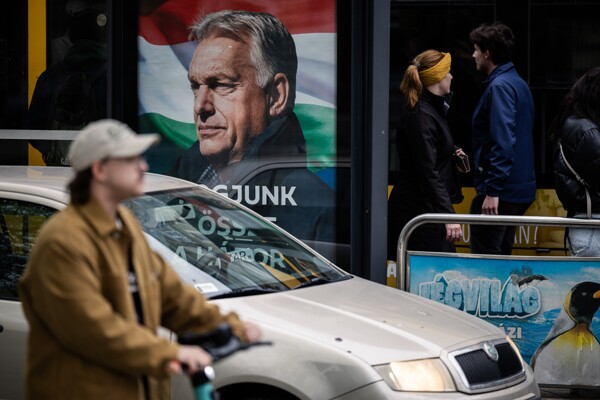
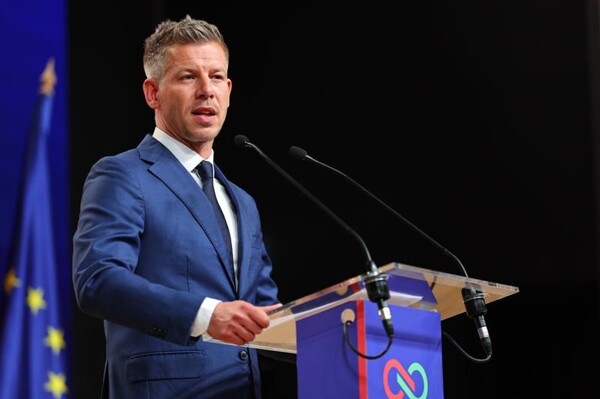
Hungary has become an example of how to gain power through elections to undermine democracy. Since 2010, the Hungarian Constitution has been amended 112 times at Orbán's initiative, without the participation or support of other political forces. Thus, the text that was supposed to express a broad political and social consensus became the law of those in power. The essential democratic differentiation between state and government blurred: the ruler sought to adapt the state to himself. In 2010, Orbán won with 53% of the vote. Unlike the authoritarianisms of other eras, today's can come to power through the democratic system to then dismantle the separation of powers. In 2012, the organization of the judiciary was reformed. A presidential ally took over the National Judicial Office, responsible for appointing and supervising judges. Instead of judicial control over political power's actions, the opposite occurred. While international democracy reports from The Economist or the V-Dem Institute at the University of Gothenburg in Sweden warned of Hungary's authoritarian drift, the government claimed it was an 'unprecedented expression of the people's opinion on political decisions, on the direction the country should take.' From 2017 onwards, norms were passed to hinder foreign donations to non-governmental organizations. Orbán's government boasted of allocating up to 5% of GDP in discretionary transfers to the population, especially in disadvantaged areas. From the start of the government in 2010, a law regulating the media was passed with little deliberation, prohibiting content 'contrary to the public interest.' Later, the government came to control up to 80% of the media. At the same time, public television and radio became instruments of government and party propaganda. Autarky in the face of external recommendations on corruption and human rights. European funds to help pandemic recovery were blocked for Hungary due to the risk of corrupt practices. The European Parliament classified Hungary in 2022 as a 'hybrid regime of electoral autocracy.' Electoral clientelism. Weakening the independence of the judiciary. Capture of autonomous institutions. Orbán modified 300 articles of the electoral law to favor the formation of super-parliamentary majorities that did not correspond to the votes cast in the urns. This allowed him, for example, in 2014 to secure 67% of parliament with only 45% of the vote. But now this has backfired: the new government, with 53% of the vote, will have 69% of parliament. Designing tailor-made rules from power can be a boomerang when you lose power. Hungary represents only 2% of the European Union's population, but its elections have had a significant international political effect, as this country had become a laboratory for the authoritarian populism spreading worldwide, because the defeated Viktor Orbán had the backing of powerful leaders—Trump, Netanyahu, and Putin—and because his government obstructed decisions within the European Union that must be adopted unanimously. In the internal context, what characterized Orbán's government? At the head of the Prosecutor's Office, the Constitutional Court, and the media authority, individuals were appointed who acted as transmission belts for the interests of power. Control of the media. Instead of checks and balances, there were extensions of the ruler's will. Authoritarian complacency. Financial suffocation of civil society organizations. There was even talk of support for 'social firewood.' Ten facts paint his portrait. One.

Democracy Under Threat: How Hungary Became an Authoritarian Laboratory
Since 2010, Viktor Orbán's government in Hungary has amended the Constitution 112 times, weakening democratic institutions and concentrating power. This article analyzes the methods used to undermine judicial independence, media freedom, and civil society, turning Hungary into a model for authoritarian regimes worldwide.