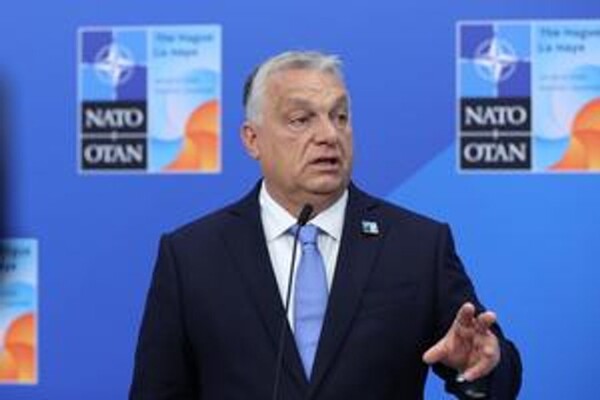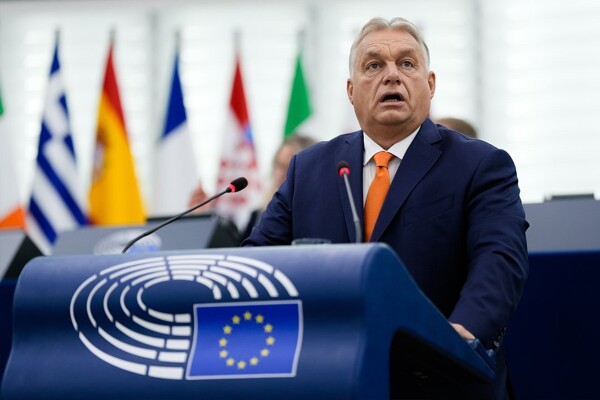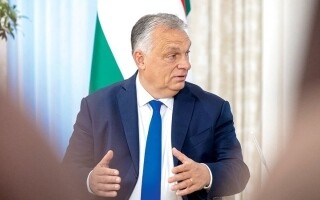
The real danger facing Hungary is not Russia but the European Union, Hungarian Prime Minister Viktor Orban said in a powerful speech to his supporters the other day, as his nationalist party steps up its campaign against the EU ahead of national elections in April next month. With just eight weeks until the elections on April 12, Orban and his 'Fidesz' party face the toughest challenge since coming to power in 2010, with the future of Hungary's prime minister completely uncertain. Most polls show that 'Fidesz' is lagging behind the centrist 'Tisza' party led by Peter Magyar, although Orban has based his election campaign on the unfounded premise that the EU will send Hungarians to their doom in neighboring Ukraine if his party loses the election. In his speech the other day, Orban compared the European Union to the repressive Soviet system that controlled Hungary for 40 years in the last century, from the existence of the Soviet Union and its dominance over Eastern Europe, and rejected the belief of many European leaders that Russian President Vladimir Putin poses a threat to European security. Orban said, referring to the EU capital in Belgium: 'We must get used to the idea that those who love freedom should not fear the East, but Brussels itself.' Orban has always strongly opposed military and financial aid to Kyiv since the start of the all-out war in Ukraine on February 24, 2022, maintaining close ties with Moscow, while taking a hostile stance towards Hungary's partners in the European Union and NATO, whom he describes as 'war hawks.' Orban has consistently provoked conflicts with the European Union, which has frozen billions of euros in funding earmarked for Budapest, due to poor relations with Brussels over fears that Orban has dismantled democratic institutions, undermined judicial independence, and overseen widespread official corruption. In turn, Orban has increasingly resorted to obstructing the EU's decision-making process, constantly threatening to use his veto right on key policies such as providing financial and military aid to Ukraine. As the elections approach, Orban has portrayed the 'Tisza' party as a 'puppet' created by the EU to oust his government and serve foreign interests, claims that 'Tisza' has strongly denied. Magyar, the party's leader, pledged to repair strained relations between Hungary and its Western allies, revive the stagnant economy, and return the country to a more democratic path. In his speech last Saturday, Orban accused multinational companies, such as banks and energy companies, of profiting from the war in Ukraine and conspiring with his political opponents to defeat him in the elections. Orban said: 'It is perfectly clear that in Hungary, the oil companies, the banking world, and the ruling elite in Brussels are preparing to form a government.' He added: 'They need someone from Hungary who has never taken a strong stand, said no, or refused a request from the European Union.' Orban promised that if his party wins a fifth consecutive majority in the elections, he will continue his efforts to free Hungary from what he sees as entities violating the country's sovereignty. Orban praised US President Donald Trump, who announced his support before the elections, for creating an environment that allows for the expulsion of 'fake NGOs, journalists, corrupt judges, and politicians.' Orban said: 'The new US President rebelled against the liberal global network of business, media, and politics, which boosted our chances.' He added: 'Therefore, we can also make great strides and expel foreign influence from Hungary and its agents who limit our sovereignty.' He added: 'Brussels' repressive machine is still operating in Hungary, and we will dismantle it after April'.